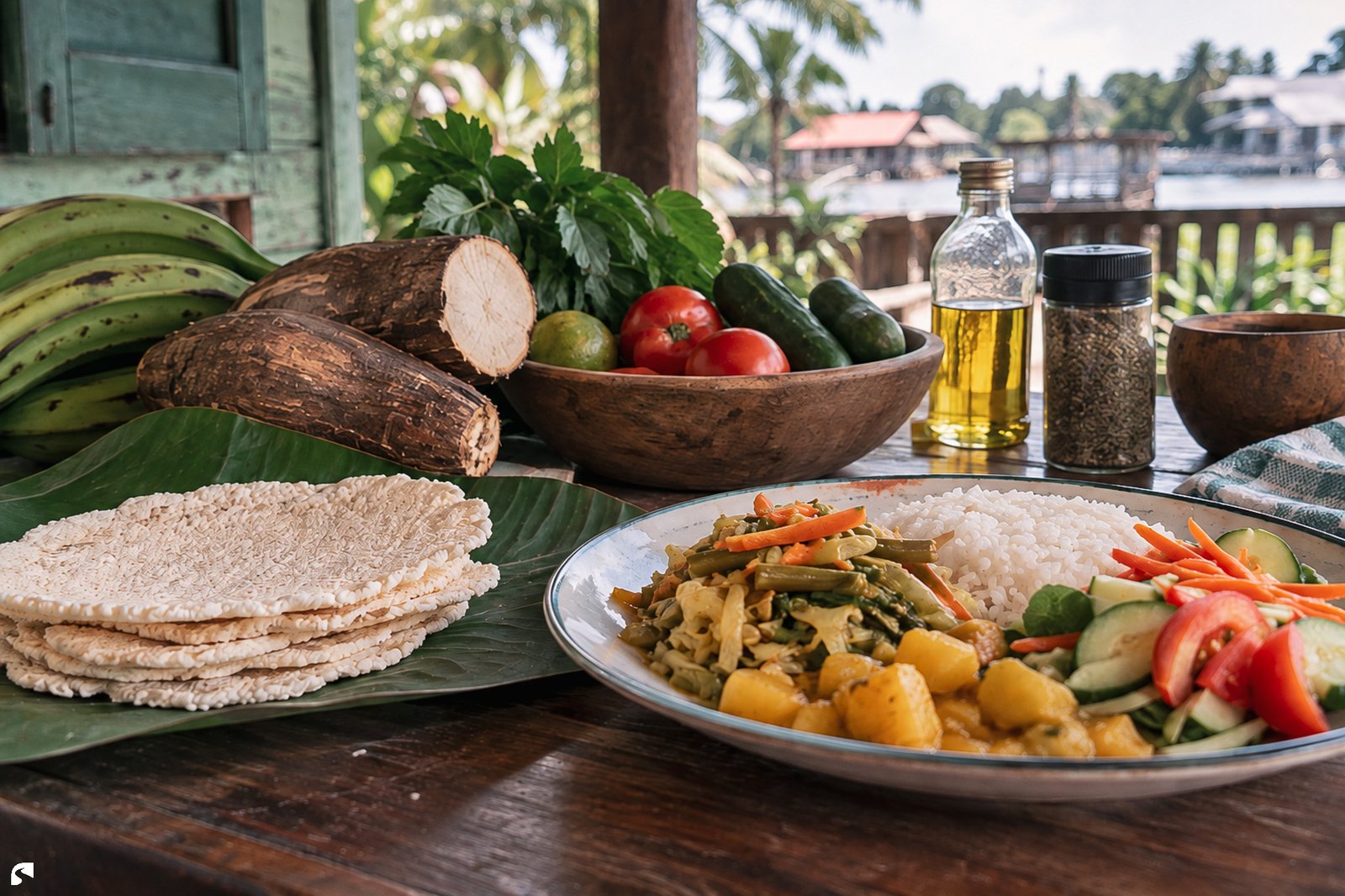
Suriname is known for its extraordinary mix of cuisines. Creole, Javanese, Hindustani, Chinese, Indigenous, Maroon and European influences all meet here, making food one of the highlights of traveling through the country. But if you need to eat gluten-free, that same diversity can make things complicated. A plate of rice, cassava or grilled food may look completely safe, yet gluten can appear in unexpected places: soy sauce, seasoning mixes, bouillon powder, breadcrumbs, frying oil and even condiments.
To better understand what gluten-free travelers should expect, we spoke with Chantal Landburg, who has been eating gluten-free in Suriname for years and created a Facebook community to help others navigate the same challenge.
Her main advice is simple: Never assume. Ask questions.
Why gluten-free eating in Suriname can be challenging
One of the biggest difficulties is not necessarily Surinamese food itself, but the ingredients used during preparation.
Because Asian cuisines have had such a strong influence on Suriname, soy sauce and similar sauces are widely used. Many of these contain gluten. Bouillon cubes and seasoning powders are another common ingredient. This means that even something that appears naturally gluten-free, such as rice with vegetables, may have been cooked with a seasoning mix or sauce containing gluten. Processed foods can present the same problem.
For travelers who are especially sensitive to gluten, the question is therefore not simply: “Does this contain bread or flour?”
You may also need to ask:
- Was bouillon used?
- Which brand?
- Was soy sauce added?
- Were any other bottled sauces used?
- Was anything breaded?
- Was the food fried in oil that is also used for breaded products?
Some bouillon products available locally are gluten-free. Chantal mentions Calnort bouillon powder as one example she has used. But ingredients and formulations can change, so checking the packaging remains important.
Surinamese foods that may be gluten-free
There are quite a few traditional foods that can potentially work well for gluten-free travelers. Examples include:
Teloh
Fried cassava is naturally gluten-free. It is often served with different accompaniments, so those should still be checked separately. Also ask whether the frying oil is used for foods containing flour or breadcrumbs.
Peçel
A Javanese vegetable dish that can potentially be gluten-free, although sauces and seasonings should still be checked.
Rice-flour and cassava-based Javanese snacks
Several traditional snacks use rice flour or cassava instead of wheat flour. Preparation methods and additional ingredients can still vary.
Atjupo / peprewatra with cassava bread
Cassava bread itself is naturally gluten-free and can be a very useful alternative to regular bread.
Soups
Many Surinamese soups start with naturally gluten-free ingredients, but bouillon and other added ingredients can introduce gluten.
And that illustrates the recurring theme: A dish can start out gluten-free and still end up containing gluten during preparation.
Cassava bread can be your friend
For travelers heading into the interior of Suriname, cassava bread can be particularly useful. Cassava has been a staple food among Indigenous communities for generations, and cassava bread offers a naturally gluten-free alternative to regular bread. For breakfast, for example, cassava bread combined with fruit, peanut butter, eggs or other simple toppings can make things considerably easier.
Cross-contamination still matters, however.
A shared butter dish, knife or jar of peanut butter that has been used with ordinary bread can contain crumbs. Someone with a high sensitivity or celiac disease may therefore need separate utensils and spreads.
Explaining “gluten-free” in a Surinamese restaurant
One practical difficulty is that not everyone in Suriname is familiar with the term gluten-free. Restaurants that frequently serve international visitors are generally more likely to understand dietary restrictions. In smaller restaurants or local eateries, staff may genuinely not know what gluten is. Chantal has developed a practical way of dealing with this.
Rather than only saying that she cannot eat gluten, she explains the ingredients she has to avoid. For example:
No wheat flour (“blom”), bread, pasta, noodles or breadcrumbs.
She also asks specifically about:
soy sauce, bouillon, seasoning powders and sauces.
Chantal sometimes describes her condition as a “gluten allergy,” even though she knows this is not technically the same thing. She finds that the word allergy often communicates the seriousness of the restriction more clearly in everyday restaurant situations. If the staff seem confused when you ask about gluten-free food, that is a signal to ask more questions rather than fewer.
How the restaurant responds also matters. If the kitchen is willing to discuss ingredients, adapt a dish and take precautions, you may be able to find a solution. If the answers remain vague, you will have to decide whether you are comfortable with the risk.
Cross-contamination is one of the biggest concerns
For travelers with celiac disease or strong sensitivity, cross-contamination can be more difficult to manage than the ingredients themselves.
Shared frying oil is one example. Cassava may be gluten-free, but if it is fried in the same oil as breaded food, traces of gluten can be transferred.
The same can happen with:
- cutting boards;
- knives;
- cooking utensils;
- frying oil;
- pans;
- butter;
- peanut butter;
- serving spoons;
- preparation surfaces.
This is particularly difficult in small kitchens where different dishes are prepared close together. There is no universal solution. A traveler has to communicate clearly with the kitchen and assess each situation individually.
Gluten-free shopping in Paramaribo
The good news is that gluten-free products are available in Suriname. The more frustrating part is that they are scattered across different supermarkets, and many stores do not have a dedicated gluten-free section. According to Chantal, supermarket employees may also not always know which products are gluten-free. That means shopping often involves reading labels, a lot of labels. A translation app with camera translation can be particularly helpful for imported products.
Chantal recommends several stores where she has regularly found gluten-free items.
Tulip Supermarket
Products have included gluten-free or suitable:
- soy and barbecue sauces;
- flours;
- pasta;
- cereals;
- crispbreads;
- cake and pancake mixes;
- pizza;
- snacks and chips.
Choi Supermarket
Chantal has found products including:
- bread;
- flour alternatives;
- pasta;
- cereal;
- crispbread;
- chips;
- cookies;
- wafers;
- nuts.
Gao Ming
A useful place for Asian ingredients, including noodles and flours made from:
- cassava;
- rice;
- sweet potato.
Best Mart
Best Mart carries many imported Albert Heijn products, some of which are gluten-free. Depending on current stock, you may find sauces, pasta, cereal and snacks.
Van den Tweel
Some gluten-free Albert Heijn products may also be available here.
Soeng Ngie Oriental Market
Useful for Asian products such as rice noodles and certain sauces with suitable formulations.
Other supermarkets
Even supermarkets without dedicated gluten-free sections commonly stock naturally gluten-free products such as:
- rice noodles;
- certain bouillon powders;
- chips;
- rice products;
- cassava products;
- nuts;
- fruits and vegetables.
Another useful label-reading tip concerns Brazilian products.
Many products from Brazil clearly state:
“Não contém glúten” — does not contain gluten.
or
“Sem glúten” — gluten-free.
These labels can make shopping considerably easier.
Availability changes frequently
One important warning: supermarket stock in Suriname can vary considerably. A gluten-free product that is easy to find today may disappear for several weeks or months. For that reason, it is better not to depend on one particular imported product throughout your trip. When you find something useful, buying enough for the next part of your journey may save you trouble later.
Restaurants that have offered gluten-free options
Based on Chantal’s own experiences and information shared within her gluten-free community, the following restaurants have been able to accommodate gluten-free guests at some point:
- Moments Restaurant – International
- Boutique Hotel Peperpot – Javanese and Creole
- Torarica – International
- Garden of Eden – Thai
- Spice Quest – Asian fusion
- Maharaja’s Palace – Indian
- Raja Ji – Indian
- Garden of Eden Noodle Bar – Thai
- Houttuyn Resort – International
- Las Tias – Latin
- A La John – International
- Passie Food & Wines – International
- Meraki – Healthy meals by order
- Courtyard by Marriott
- ‘t Vat
- Roline’s de Waag
- Hard Rock Cafe Suriname
This should be treated as a starting point rather than a guarantee.
Menus, kitchen procedures, staff and ingredients change. Always explain your dietary requirements when reserving and again when ordering. Ordering something described as gluten-free also does not automatically mean that a kitchen is preventing cross-contamination. Travelers who prefer vegetarian meals will often find that many restaurants can adapt dishes around rice, vegetables, cassava and other local staples, but the same rule applies: ask how the meal is actually prepared.
One restaurant that stands out
For Chantal, Garden of Eden has provided one of her most positive dining experiences. When she mentions her dietary requirements while reserving, she says the staff understand the issue well and know how to handle her meal. That level of familiarity makes a major difference. Her more difficult experiences tend to come from ordinary everyday restaurants where gluten-free diets are less familiar. Sometimes so much explanation is required that eating out simply becomes more trouble than it is worth.
Heading into the Surinamese interior
Traveling into Suriname’s interior introduces another challenge. Once you leave Paramaribo, supermarkets become smaller and specialized products become much harder, or impossible, to find. Preparation is therefore essential.
Chantal recommends carrying backup foods such as:
- gluten-free crackers;
- nuts;
- dried fruit;
- energy or protein bars;
- other non-perishable snacks.
For longer journeys, there is another surprisingly effective trick:
Bring your own gluten-free bouillon and soy sauce. Hand these directly to the cook and explain that they should be used for your meals.
Two small ingredients can suddenly make many more dishes possible. A cook may already have rice, vegetables, cassava, fruit and other basic ingredients available. The problem is often the seasonings normally used with them. There are still situations where separate preparation may be difficult — especially when flour-based foods are being prepared in the same kitchen, but bringing your own ingredients gives the kitchen far more options.
Consider accommodation with a kitchen
For someone with celiac disease or a very high sensitivity to gluten, Chantal recommends considering accommodation with cooking facilities. Having your own kitchen means you are not dependent on restaurants three times a day. You can prepare simple breakfasts and meals yourself while selectively using restaurants that you feel comfortable with. For breakfast outside the hotel, simple meals can sometimes be easiest. An omelet with vegetables, fresh fruit or a simple salad, for example, may require fewer substitutions than trying to recreate a traditional bread-based breakfast.
Again, preparation surfaces and ingredients should still be discussed when cross-contamination is a concern.
Gluten intolerance and celiac disease are not the same travel experience
How difficult traveling in Suriname will be depends heavily on your individual level of sensitivity. Someone avoiding gluten as an intolerance may be able to eat many traditional dishes, particularly if small amounts from seasoning or cross-contact do not cause problems.
For someone with celiac disease, the situation is considerably more complicated.
Ingredients, sauces, shared cooking oil and cross-contamination all become important. Two travelers who both say they “eat gluten-free” may therefore have completely different requirements. Make sure guides, hotels, restaurants and tour operators understand your specific level of restriction rather than simply saying that you prefer gluten-free food.
Chantal’s backup strategy
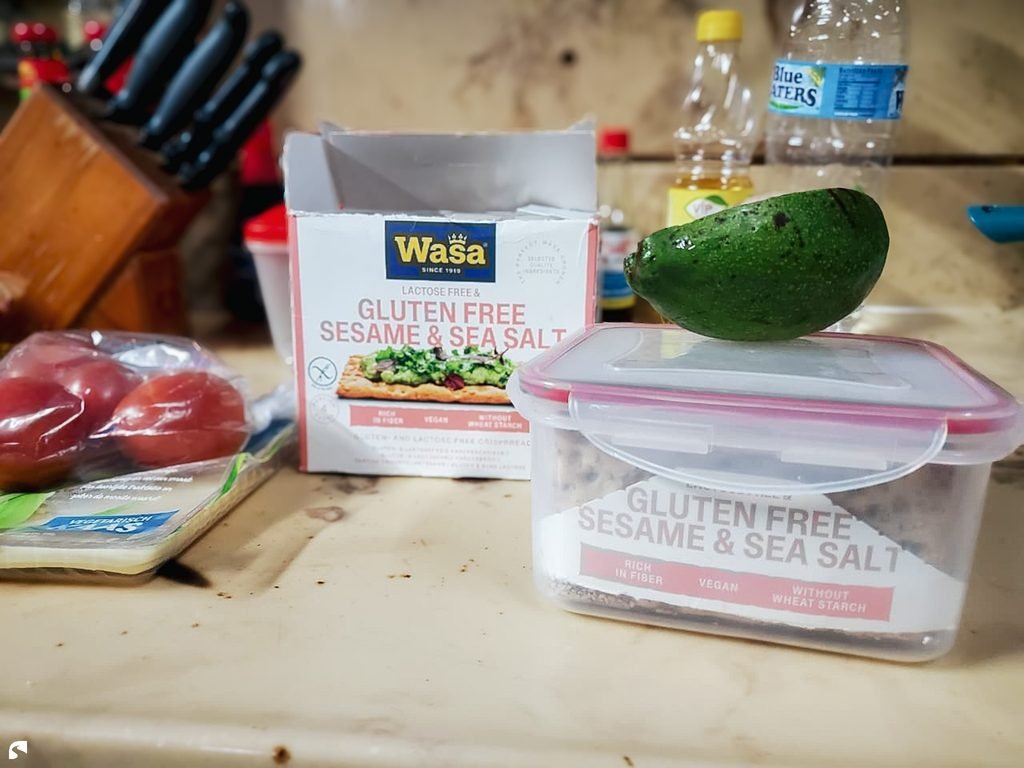
One lesson Chantal has learned over the years is never to rely completely on finding suitable food while traveling. She carries snacks. She researches ahead. She reads labels. And when heading into remote areas, she may bring ingredients herself.
That habit grew out of necessity.
After developing serious symptoms years ago, Chantal gradually began investigating the relationship between her health and food. Through observation, keeping a food diary, eliminating and reintroducing foods and researching ingredients, she concluded that gluten was causing her problems.
Changing her diet was not easy.
She had loved baking cakes and bread since childhood. Suddenly she had to relearn how to cook, shop and travel. Even apparently harmless foods could create problems. Something like banana chips, for instance, could become contaminated if fried in oil previously used for flour-based snacks.
That experience made preparation an important part of everyday life. She eventually started bringing her own meals during fieldwork, sometimes for trips lasting several days, regardless of whether a refrigerator or proper kitchen would be available.
What initially felt overwhelming eventually became routine.
Why she created a gluten-free community in Suriname
When Chantal first had to change her diet, she found very little information specifically about living gluten-free in Suriname. Awareness was limited. Suitable restaurants were difficult to identify. Products were scattered among different supermarkets. And people newly discovering gluten-related dietary restrictions often had to figure everything out themselves.
That is why she created a Facebook group where people can exchange information about:
- gluten-free products;
- supermarkets;
- restaurants;
- new discoveries;
- ingredients;
- personal experiences.
For someone who has only recently started eating gluten-free, having access to people who have already spent years reading labels and exploring local stores can save an enormous amount of time.
So, can you travel gluten-free in Suriname?
Yes, but the amount of preparation required depends on how strictly you need to avoid gluten. Suriname actually has many naturally suitable ingredients: rice, cassava, vegetables, fruit, legumes and traditional cassava bread are widely available. Many of these ingredients also make it relatively easy to build simple vegetarian-friendly meals while traveling.
The complication usually begins with what gets added during preparation.
- Soy sauce.
- Bouillon.
- Seasoning mixes.
- Breadcrumbs.
- Shared cooking oil.
That is why communication matters so much. Ask detailed questions, carry backup food and do not be afraid to bring a few trusted ingredients with you when traveling into remote areas.
And when something seems naturally gluten-free, remember Chantal’s most important lesson: Ask anyway.
A note for travelers
Restaurant procedures, recipes and supermarket stock can change. The businesses mentioned in this article are based on Chantal’s experiences and community information and should not be interpreted as a guarantee that every dish or kitchen environment is gluten-free.
Travelers with celiac disease, allergies or severe sensitivity should always confirm ingredients and cross-contamination procedures directly with the restaurant, accommodation or tour operator.
At Nomadic, we also encourage guests to tell us about dietary preferences and restrictions in advance. Whether you eat gluten-free, vegetarian or follow another diet, communicating early gives guides and accommodation partners a much better chance of preparing suitable meals, particularly on trips into Suriname’s interior.
About the co-author

Chantal Landburg has been navigating gluten-free living in Suriname for several years. After experiencing firsthand how difficult it was to find reliable local information, she created an online community where people can exchange information about gluten-free products, restaurants, ingredients and everyday life in Suriname.